
People are careful about their water and casual about their pot. It should be the other way round — or rather, it should be both.
Why a damp pot is a problem
You have boiled your water, cooled it, measured your salt precisely. Then you pour it into a vessel that has been sitting closed and damp on a bathroom shelf since yesterday.
Warm, moist, enclosed spaces are where bacteria and mould are happiest. A neti pot that never fully dries between uses undoes the care you took with everything else.
The routine, after every single use
- Empty it completely. Do not leave residual solution sitting in the base.
- Rinse with clean water. Boiled-and-cooled or distilled, same standard as the rinse itself. Swirl it through the spout as well, not just the body.
- Wash weekly with mild soap. A little dish soap and a soft brush, then rinse thoroughly so no residue remains. Soap residue in a nasal rinse is unpleasant.
- Air-dry completely. This is the step people skip. Leave it upside down on a clean, dry surface with the spout unobstructed, in open air — not sealed in a cupboard or a plastic box.
- Store it dry and covered. Once it is genuinely dry, keep it somewhere clean and dust-free.
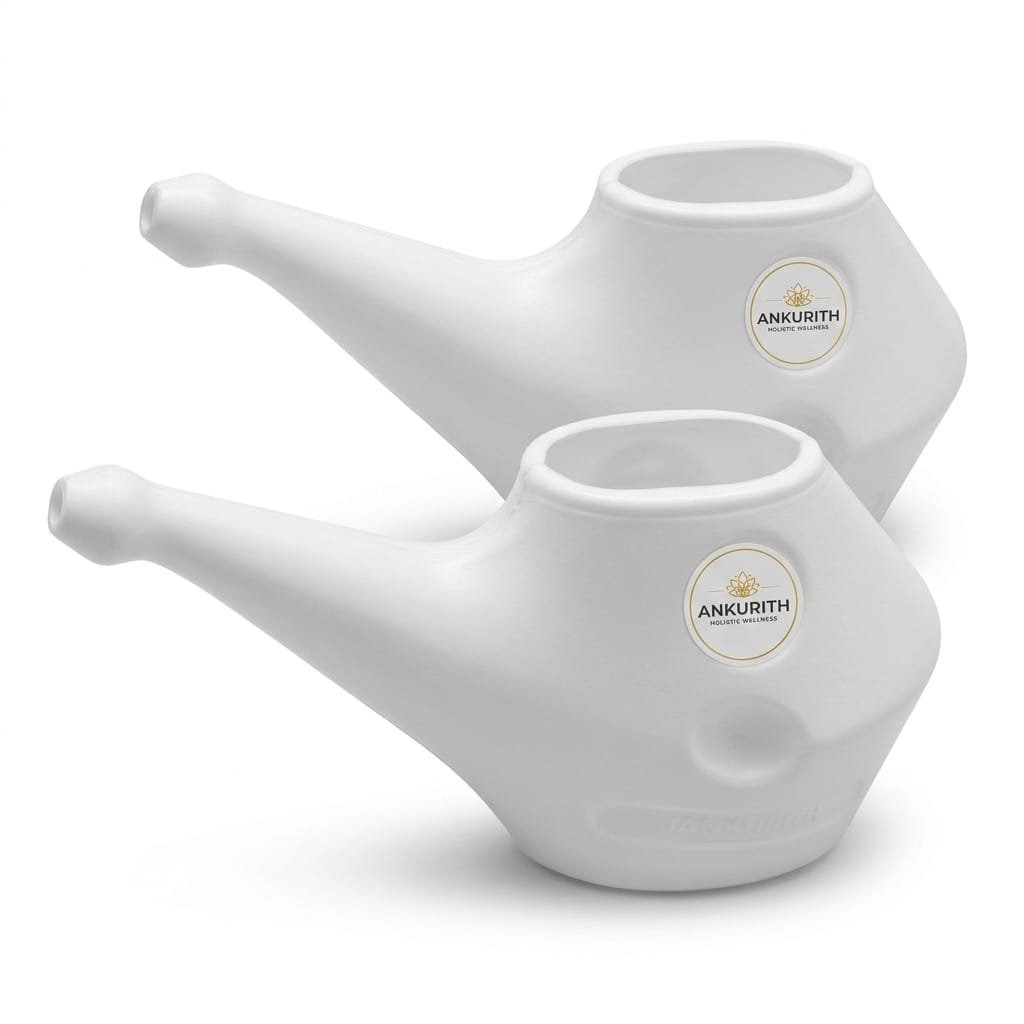
The spout is where problems hide
The body of the pot is easy. The narrow spout is where mineral deposits and biofilm accumulate, and where most people never look.
Once a week, run water through it under pressure from the inside out, and check the opening is clear. If your pot has a spout too narrow to inspect or clean, that is a design flaw rather than a maintenance problem.
Three rules that are not negotiable
- Never share a pot. One pot, one person. Treat it like a toothbrush.
- Replace it if it cracks. A hairline crack is impossible to clean properly.
- Do not store it wet. If you are in a hurry, dry the inside with a clean paper towel rather than putting it away damp.
Ankurith Jal Neti Pot
A contoured spout, an easy grip and a wide mouth that actually lets you clean it properly. Made in India.
Buy on AmazonPair good pot hygiene with correctly prepared water and the practice is about as low-risk as a daily habit gets. We explain the water standard in the one rule of nasal irrigation.
Keep reading
Jal Neti vs Saline Nasal Spray
They do related but genuinely different jobs. Here's how to choose — or use both.
Read →
Who Should Not Practise Jal Neti
It's a gentle practice, but not a universal one. The situations that warrant medical advice first.
Read →
Breathing Through an Indian Winter
When the AQI climbs, your nose does more filtering than usual. Here's how to look after it.
Read →