These are often presented as competitors. They are better understood as different tools, and plenty of people sensibly use both.
The core difference is volume
A saline spray delivers a fine mist — typically under a millilitre per application. A neti pot delivers a continuous flow of around 250 ml through each nostril.
That difference explains almost everything else. A spray moistens and soothes the front of the nasal passage. A rinse physically flushes the whole passage from one side to the other.
Where each one wins
Saline spray is better for
- Portability. It fits in a bag and works at your desk or on a flight.
- Speed. Two seconds, no preparation, no basin.
- Dryness relief. Quick moisture for a nose parched by air-conditioning.
- People who find rinsing daunting. There is no technique to learn.
Jal Neti is better for
- Actually clearing the passages. Volume is what removes trapped particles and thickened mucus.
- Cost per use. A 385 g jar of salt covers roughly 77 rinses. Sprays are far more expensive per use and run out quickly.
- Post-exposure cleaning. After a dusty commute or a high-AQI day, a mist does not do much.
- Preparing for pranayama. The traditional pairing exists because the passages are genuinely clear afterwards.
- Control over the solution. You know exactly what is in it — two ingredients, measured.
An honest cost comparison
A typical saline spray gives perhaps 100 to 150 applications. A 385 g jar of Jal Neti salt gives around 77 full rinses, each one delivering several hundred times the volume of a single spray.
Per unit of saline actually delivered to your nasal passages, the pot is not slightly cheaper — it is cheaper by a wide margin. The trade-off you are paying for with a spray is convenience, not effectiveness.
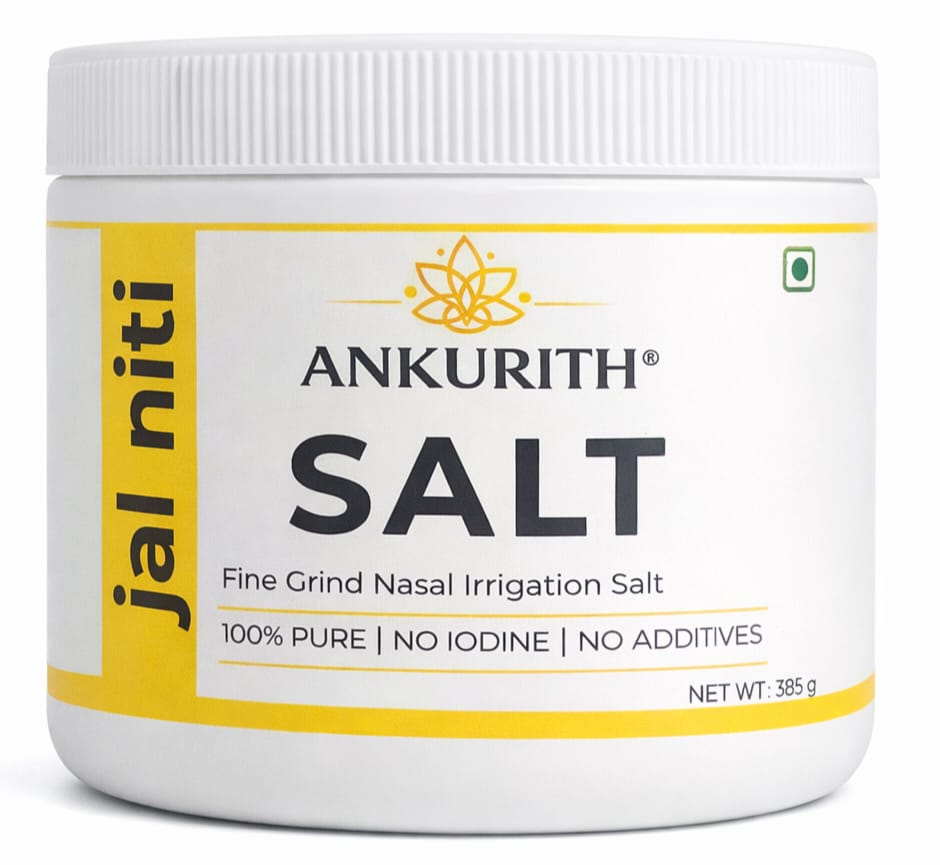
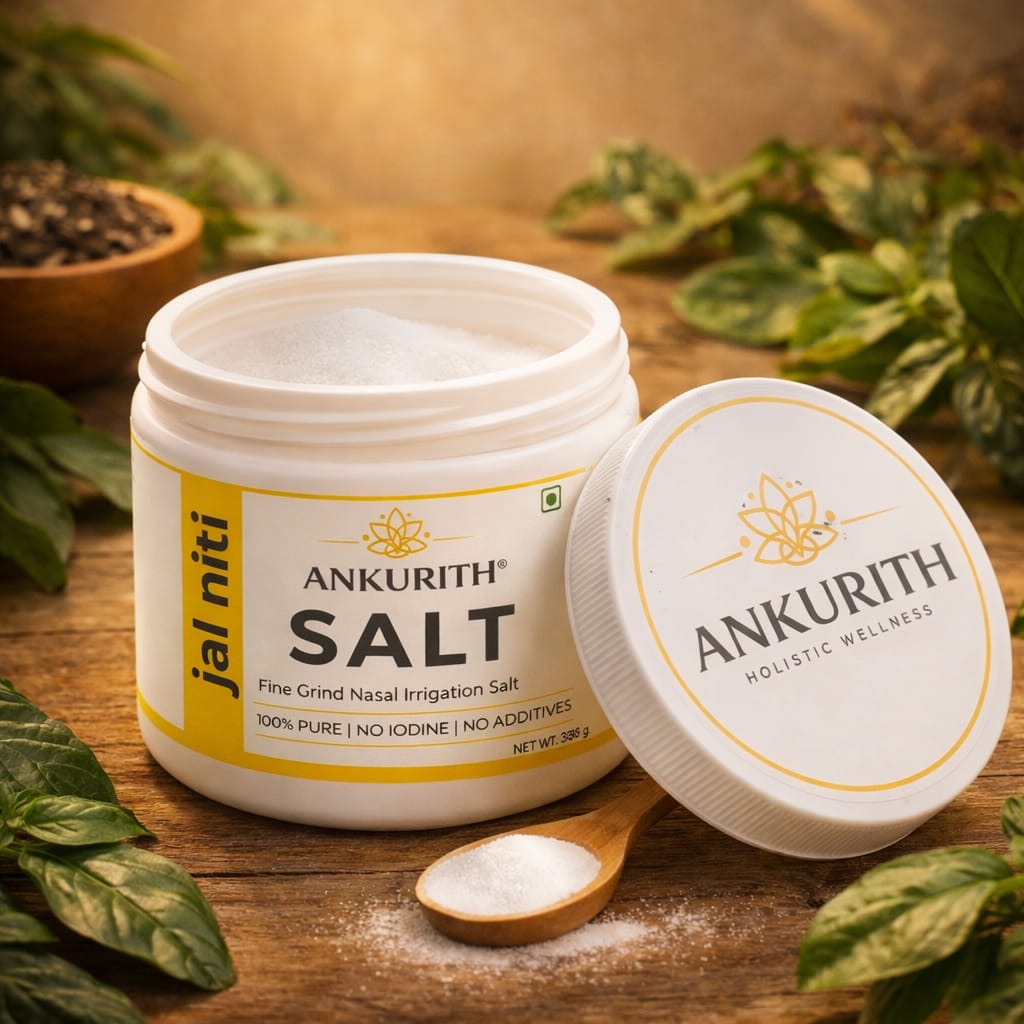
Ankurith Jal Neti Salt
Fine grind, 100% pure, non-iodised. 4.3 g sodium chloride and 0.7 g sodium bicarbonate per 5 g serving, with a measured scoop in every 385 g jar.
Buy on AmazonThe sensible answer for most people
Rinse properly once a day at home, and keep a spray in your bag for dryness during the day. They are not in competition; they cover different moments.
If you have to choose one and you are at home each morning, the pot does more. If your day is unpredictable and you travel constantly, the spray is the one you will actually use — and a practice you keep beats a better practice you abandon.
Whichever you choose, the water rule applies to the pot and not the spray: commercial sprays are sterile in the bottle, while a rinse you mix yourself needs boiled-and-cooled, distilled or sterile water.
Keep reading

Jal Neti's Place in the Six Shatkarmas
Where nasal cleansing sits in the classical purification practices — and why it comes before pranayama.
Read →
10 Real Benefits of Daily Jal Neti
An honest account of what a daily saline rinse does — and, just as importantly, what it doesn't.
Read →
7 Mistakes That Make Beginners Quit Jal Neti
Almost everyone who gives up does so in week one, for one of seven entirely fixable reasons.
Read →