
Jal Neti is not a wellness trend that borrowed a Sanskrit name. It is one component of a structured system described in classical Hatha Yoga texts.
The six shatkarmas
The Hatha Yoga Pradipika, compiled in the fifteenth century, describes six purification practices intended to prepare the body before the deeper work of pranayama and meditation:
- Neti — nasal cleansing
- Dhauti — cleansing of the digestive tract
- Nauli — abdominal massage and churning
- Basti — cleansing of the colon
- Kapalabhati — cleansing through rapid breathing
- Trataka — concentrated gazing
Neti itself has two principal forms: Jal Neti, using water, and Sutra Neti, using a soft thread or catheter. Jal Neti is by far the more accessible, and the only one we would suggest practising without direct supervision.
Why cleansing comes before breathing
The sequencing is deliberate. Pranayama works with fine control of the breath — lengthening it, retaining it, directing it through one nostril at a time. All of that assumes the passages are actually open.
Attempting nadi shodhana (alternate nostril breathing) with a congested nose is frustrating and mostly pointless. Clear the passage first, then work with the breath. The classical texts arrive at the same conclusion by a different route to the one modern physiology would take, but they arrive at it.
Purify the channels, then work with what moves through them.
The traditional sequence
A classical morning order runs roughly:
- Jal Neti — rinse the nasal passages
- Dry thoroughly, traditionally with gentle kapalabhati
- Asana practice
- Pranayama
- Meditation
Note that drying sits between the rinse and everything else. Residual water in the sinuses during forward bends is unpleasant and entirely avoidable — bend forward, turn the head slowly side to side, and blow gently before moving on.
Where tradition and evidence meet
We should be careful here. That a practice is ancient does not make it effective, and that it is described in a fifteenth-century text is not clinical evidence.
What can be said plainly is this: saline nasal irrigation is a well-established hygiene practice, recommended by clinicians in many contexts, and Jal Neti is a particular traditional method of performing it. The tradition supplies the technique and the ritual framing. It does not supply medical claims, and we will not either.
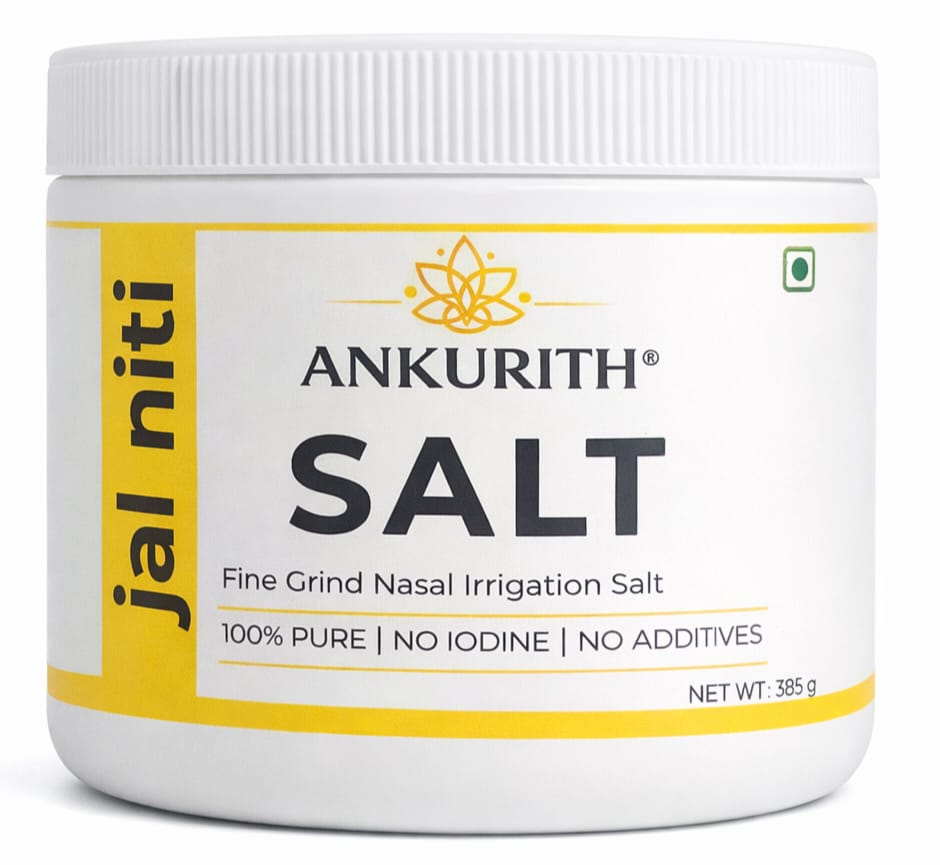
Ankurith Jal Neti Salt
Fine grind, 100% pure, non-iodised. 4.3 g sodium chloride and 0.7 g sodium bicarbonate per 5 g serving, with a measured scoop in every 385 g jar.
Buy on AmazonPractising it as part of a routine
If you already have a morning yoga practice, Jal Neti fits naturally at the start — before asana, on an empty stomach. If you do not, it still works perfectly well as a standalone five-minute habit.
Our morning ritual article covers building it into a routine, and the step-by-step guide covers the technique itself.
Keep reading

Building a Five-Minute Morning Ritual
How to fit the practice into a real morning, and make it survive past week two.
Read →
Why Table Salt Has No Place in Your Neti Pot
Iodine, anti-caking agents and grind size. Three concrete reasons the salt in your kitchen is the wrong tool.
Read →
The One Rule of Nasal Irrigation
Of everything written about Jal Neti, this is the only part that is genuinely non-negotiable.
Read →