
In short: Your nasal passages filter, warm and humidify roughly 10,000 litres of air a day. A mucus layer traps particles, and microscopic hairs called cilia sweep that mucus backwards to be swallowed. Saline irrigation works by mechanically rinsing this system — nothing more, and nothing less.
The parts that matter
- Nasal cavity. Two chambers separated by the septum, running from the nostrils back to the nasopharynx.
- Turbinates. Three curled shelves of bone on each side, covered in soft tissue. They create turbulence, forcing air to contact the moist surface so it can be warmed, humidified and filtered.
- Paranasal sinuses. Four pairs of air-filled cavities in the skull — frontal, maxillary, ethmoid and sphenoid — connected to the nasal cavity by small openings called ostia.
- Mucus blanket. A thin layer of mucus covering the lining, which traps dust, pollen, smoke and microbes.
- Cilia. Microscopic hair-like structures that beat in coordinated waves, moving the mucus blanket backwards at roughly 1 cm per minute.
Mucociliary clearance — the system you are supporting
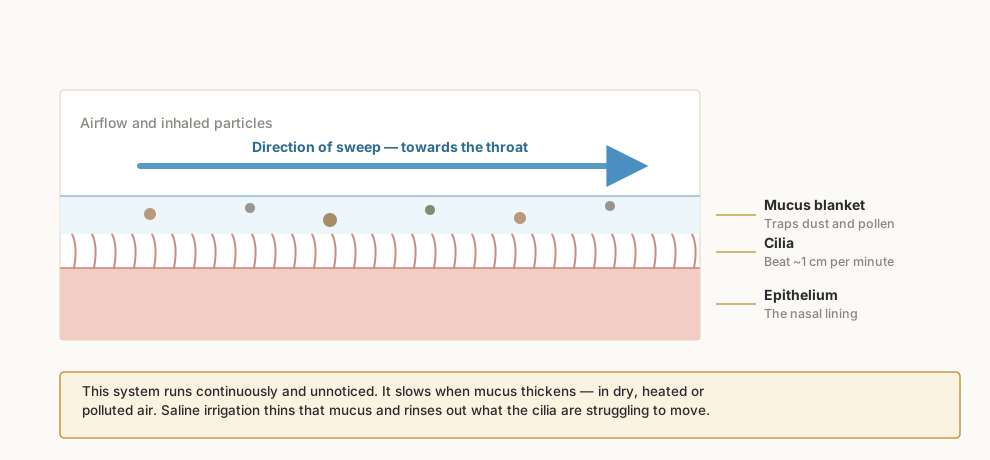
Together, the mucus and cilia form what is called the mucociliary escalator. Particles land in mucus; cilia sweep it towards the throat; you swallow it; stomach acid deals with it. This runs continuously, unnoticed, all day.
It slows down when mucus becomes too thick or too dry — which is what happens in dry heated air, in air-conditioning, and during high-pollution periods. Thickened mucus is harder for cilia to move, so debris sits longer. That is the "heavy head, blocked nose" sensation.
What irrigation actually does to this system
Saline rinsing helps in three mechanical ways: it thins thickened mucus, physically washes out trapped material, and rehydrates dry lining. That is the whole mechanism.
Why the sinuses are largely out of reach
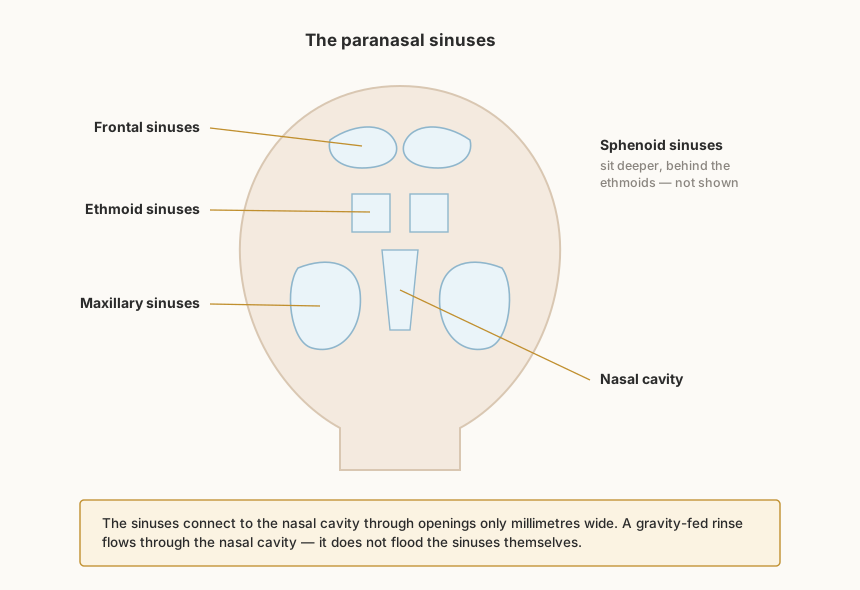
This is important and frequently overstated elsewhere. The sinuses connect to the nasal cavity through ostia that are, in most people, only a few millimetres across. A gravity-fed rinse from a neti pot flows through the nasal cavity; it does not meaningfully flood the sinus cavities themselves.
So when you read that a neti pot "cleans your sinuses", treat it loosely. It rinses the nasal passages, which is where the sinus drainage pathways open. That can help those pathways stay clear. It is not the same as washing out the sinuses.
Water safety — the one non-negotiable rule. Use only water that has been boiled and cooled, or that is distilled or sterile. Never use untreated tap water for nasal irrigation. Both the US FDA and CDC issue this guidance because the nasal cavity lacks the stomach acid that neutralises organisms in drinking water. Rare but serious infections, including Naegleria fowleri and Acanthamoeba, have been linked to tap-water nasal rinsing. Full explanation →
Why the ears are involved
The Eustachian tubes connect the middle ear to the nasopharynx — the same space your rinse water passes through. This is why blowing your nose forcefully after a rinse can push fluid towards the middle ear and produce that blocked-ear feeling.
It is also why an active ear infection or a perforated eardrum is a reason to pause the practice and speak to a doctor.
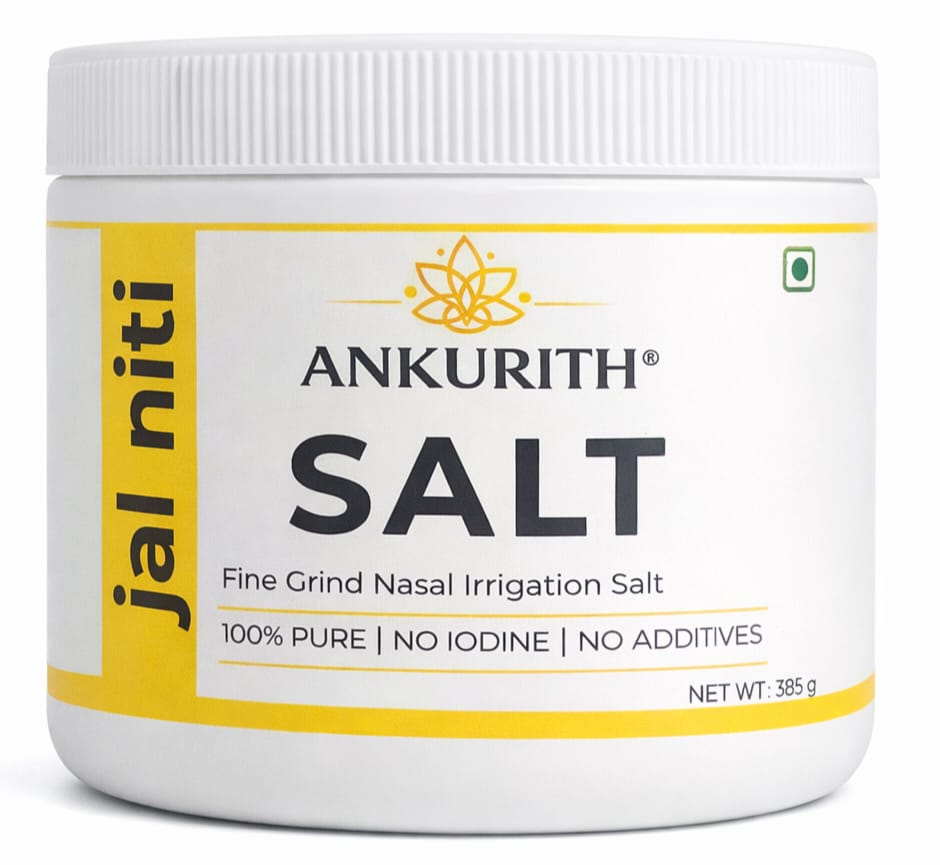
Ankurith Jal Neti Salt
Fine grind, 100% pure, non-iodised. 4.3 g sodium chloride and 0.7 g sodium bicarbonate per 5 g serving.
Buy on AmazonThe practical takeaways
- Rinse gently. Pressure does not reach further; it just risks pushing fluid where it should not go.
- Blow gently afterwards, one nostril at a time.
- Do not over-rinse. The mucus blanket is a defence, not dirt — stripping it daily several times over is counterproductive.
- If a passage is fully blocked, the water has no route. Wait, rather than forcing it.
Continue learning

What Is Jal Neti?
Definition, etymology, mechanism and scope — the complete foundational explanation.
Read →
Which Water to Use — and Why It Matters
The only genuinely non-negotiable page on this site. What water to use, and the science behind why.
Read →
The Types of Neti
Water, thread, milk and ghee — the traditional variants, and which you should never attempt unsupervised.
Read →