
In short: Jal Neti is a traditional yogic nasal cleansing practice in which lukewarm salt water is poured into one nostril and allowed to flow out of the other, rinsing the nasal passages. It is one of the six shatkarma purification practices of Hatha Yoga, and is the yogic form of what modern medicine calls saline nasal irrigation.
Where the name comes from
The term is Sanskrit. Jal (जल) means water. Neti (नेति) refers to nasal cleansing. Together, Jal Neti simply means "nasal cleansing with water".
You will also see it written as Jala Neti, Jalneti, or referred to as Neti Kriya. In Hindi it is commonly written जल नेति. These all describe the same practice.
What actually happens during a rinse
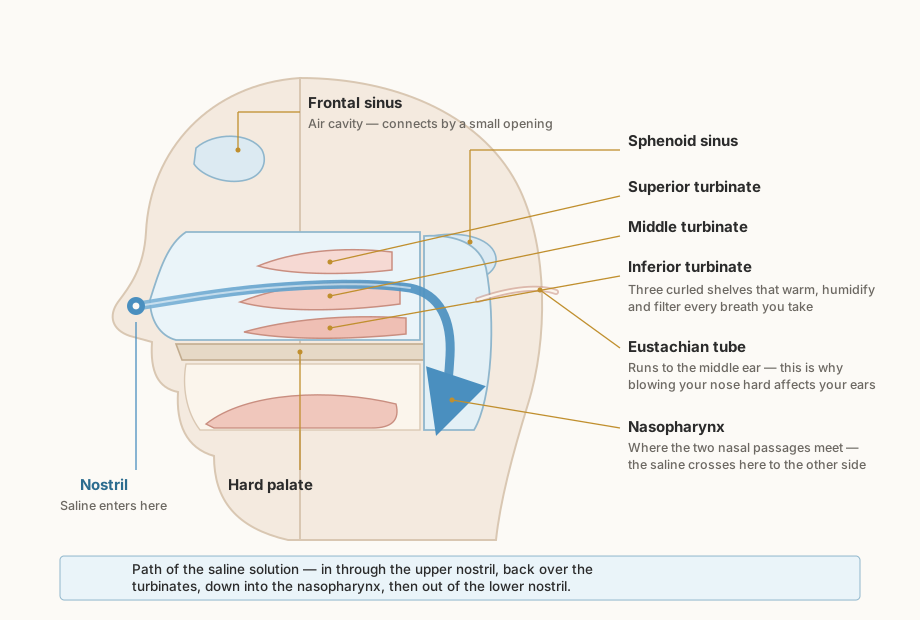
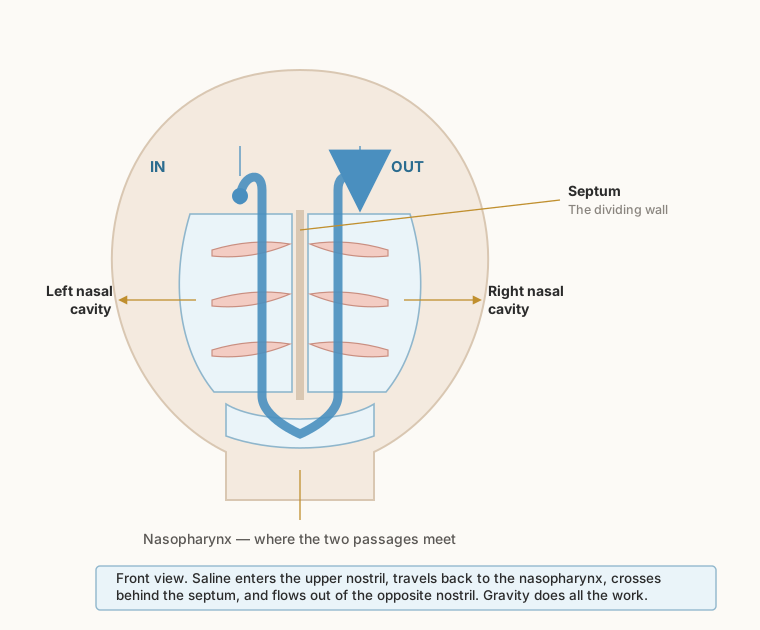
Your two nasal cavities are connected behind the nose by a space called the nasopharynx. When you tilt your head sideways and pour saline into the upper nostril, gravity carries the water across that connection and out through the lower nostril.
As it travels, the saline does three mechanical things:
- It loosens and carries away mucus that has thickened and become sticky.
- It flushes out trapped particles — dust, pollen, smoke, and other debris caught by the nasal lining.
- It rehydrates the nasal lining, which dry air, air-conditioning and heating all deplete.
There is nothing mystical about the mechanism. It is irrigation, in the plumbing sense of the word.
Why salt, and why that much?
Plain water stings badly. Your nasal tissue contains dissolved salts at a particular concentration, and when plain water meets it, osmosis draws water into the tissue — which you experience as burning.
A correctly mixed saline solution roughly matches the body's own concentration, so no such gradient exists and the rinse feels neutral. This is why measuring matters, and why the salt you use is not a trivial detail.
Water safety — the one non-negotiable rule. Use only water that has been boiled and cooled, or that is distilled or sterile. Never use untreated tap water for nasal irrigation. Both the US FDA and CDC issue this guidance because the nasal cavity lacks the stomach acid that neutralises organisms in drinking water. Rare but serious infections, including Naegleria fowleri and Acanthamoeba, have been linked to tap-water nasal rinsing. Full explanation →
What Jal Neti is not
This is worth stating plainly, because the internet is not careful about it.
- It is not a medicine. It does not treat, cure or prevent any disease.
- It is not a cure for sinusitis, allergies or asthma. It is a hygiene practice that some people find supportive alongside medical care.
- It is not a substitute for medical advice. If you have an ENT condition, your doctor's guidance comes first.
- It cannot fix structural problems like a deviated septum or nasal polyps.
Who it suits, and who should wait
Most healthy adults can practise Jal Neti safely. You should speak to a doctor first if you have had recent nasal or ear surgery, have a perforated eardrum, get frequent nosebleeds, have a persistently blocked nose, or are managing any ongoing ENT condition. Our full Q&A covers these cases individually.
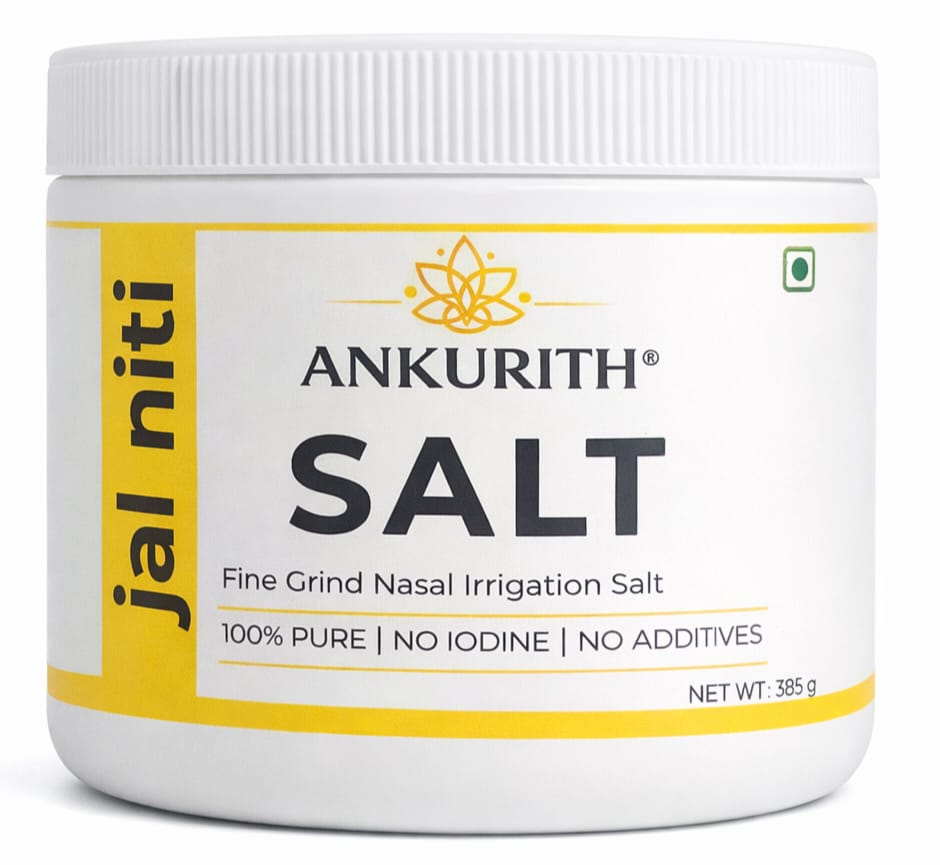
Ankurith Jal Neti Salt
Fine grind, 100% pure, non-iodised. 4.3 g sodium chloride and 0.7 g sodium bicarbonate per 5 g serving.
Buy on AmazonHow long it takes and what it costs
A complete session takes about five minutes once you are used to it. The ongoing cost is the salt: at 5 g per rinse, a 385 g jar covers roughly 77 sessions.
The main practical barrier is not technique but preparation — boiling and cooling water takes time. Most regular practitioners prepare it the night before.
Where to go next
- The step-by-step technique — how to actually do it
- Water safety — the single most important page on this site
- Types of Neti — Jal, Sutra, and the traditional variants
- How your nose works — the anatomy behind the practice
Continue learning
Which Water to Use — and Why It Matters
The only genuinely non-negotiable page on this site. What water to use, and the science behind why.
Read →
The Types of Neti
Water, thread, milk and ghee — the traditional variants, and which you should never attempt unsupervised.
Read →
How Your Nose Actually Works
Turbinates, cilia and the mucus blanket — the anatomy that explains what rinsing can and cannot achieve.
Read →