
Jal Neti has been practised in India for centuries, which means it has also accumulated centuries of exaggerated claims. Here is a grounded look at what a daily rinse genuinely offers.
What Jal Neti actually does
Your nasal passages are lined with mucus and fine hairs called cilia, which together trap dust, pollen, smoke and bacteria before they reach your lungs. That system works continuously, and like any filter it collects debris. Jal Neti is simply a way of rinsing that filter with warm saline water.
- Clears trapped particles. Dust, pollen and smoke particles that have settled in the nasal passages get flushed out rather than sitting there all day.
- Thins thickened mucus. Saline helps loosen mucus that has become dry and sticky, which is what a "heavy head" often actually is.
- Supports comfort during seasonal congestion. Many people find rinsing eases the blocked feeling that comes with seasonal changes.
- Helps you breathe through your nose again. Nasal breathing filters, warms and humidifies air in a way mouth breathing does not.
- Makes pranayama noticeably easier. This is why the practice traditionally precedes breathing exercises — clear passages mean quieter, deeper breath.
- Reduces post-nasal drip sensation. Rinsing clears material that would otherwise trickle down the back of the throat.
- Supports nasal hygiene after a polluted commute. If you have spent an hour in city traffic, your nose has done a lot of filtering.
- Moisturises dry nasal passages. Air-conditioning and winter heating both dry the nasal lining; saline restores some moisture.
- Costs almost nothing per use. At roughly 5 g per rinse, a 385 g jar covers about 77 sessions.
- Builds a five-minute grounding ritual. The practical benefit people report most often is simply having a calm, deliberate start to the day.
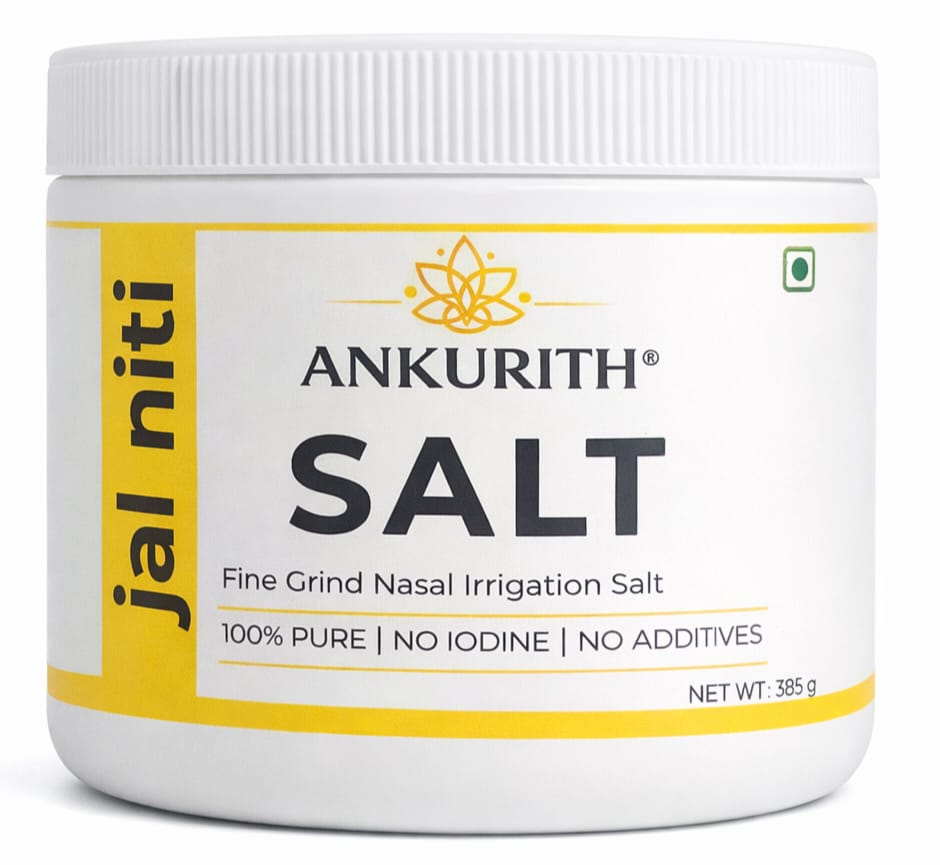
Ankurith Jal Neti Salt
Fine grind, 100% pure, non-iodised. 4.3 g sodium chloride and 0.7 g sodium bicarbonate per 5 g serving, with a measured scoop in every 385 g jar.
Buy on AmazonThree things Jal Neti will not do
We would rather you trusted us than were impressed by us, so here is the other side.
- It will not cure sinusitis, allergies or asthma. Nasal irrigation is a hygiene practice, not a treatment. If you are managing a diagnosed condition, follow your doctor's advice — rinsing may sit alongside that, but it does not replace it.
- It will not fix a structural problem. A significantly deviated septum, nasal polyps or chronic obstruction are anatomical issues. Water cannot reshape anatomy.
- It will not work if a nostril is completely blocked. The water needs somewhere to go. Forcing it when there is no path is uncomfortable and can push fluid towards the ears.
The rule that matters more than any benefit: only ever use water that has been boiled and cooled, or that is distilled or sterile. Never untreated tap water. We wrote a full explanation of why.
How long before you notice anything?
Most people notice the immediate clearing effect on the very first rinse — that is just physics. The subtler benefits, like consistently easier nasal breathing, tend to show up over two to three weeks of regular practice.
Start with two or three sessions a week rather than jumping straight to daily. Your nasal lining needs a little time to adjust, and a gentler start makes it far more likely you will still be doing this in a month.
If you are just beginning, our step-by-step guide covers the technique, and the seven common beginner mistakes article covers what usually goes wrong.
Keep reading

Why Table Salt Has No Place in Your Neti Pot
Iodine, anti-caking agents and grind size. Three concrete reasons the salt in your kitchen is the wrong tool.
Read →
The One Rule of Nasal Irrigation
Of everything written about Jal Neti, this is the only part that is genuinely non-negotiable.
Read →
Jal Neti's Place in the Six Shatkarmas
Where nasal cleansing sits in the classical purification practices — and why it comes before pranayama.
Read →