
Every winter, cities across northern India settle under a layer of particulate haze. Your nasal passages are the first line of defence, and they take the load.
What your nose is doing all day
The nasal passages filter roughly 10,000 litres of air a day. Mucus traps particles; cilia sweep that mucus backwards to be swallowed and neutralised by stomach acid. It is an elegant system, and it runs without you noticing.
On a high-pollution day, that system handles a far heavier load of particulate matter. Mucus thickens, cilia slow down, and the result is the familiar winter combination: blocked nose, heavy head, throat irritation, disturbed sleep.
Where nasal irrigation fits
Rinsing does not filter the air and it does not undo exposure. What it does is mechanical and modest: it washes out material that has already been trapped, and it rehydrates a lining that dry winter air has parched.
Think of it as clearing the filter rather than improving the air.

A practical winter routine
- Rinse after exposure, not before. If your commute is the heaviest part of your day, rinse when you get home rather than before you leave.
- Keep the water properly warm. Cold water in cold weather is genuinely unpleasant. Lukewarm, close to body temperature, every time.
- Don't over-rinse. More is not better. Rinsing several times a day can strip the protective mucus layer you actually need. Once daily is plenty for most people.
- Dry properly afterwards. Bend forward, turn your head slowly side to side, and blow gently. Residual water in cold weather is uncomfortable.
- Pair it with the obvious. A decent mask on high-AQI days does more to reduce exposure than any rinse does.
If congestion persists. Winter congestion that lasts more than a couple of weeks, or comes with facial pain, fever or coloured discharge, is worth showing to a doctor. Nasal irrigation is a hygiene practice, not a diagnosis.
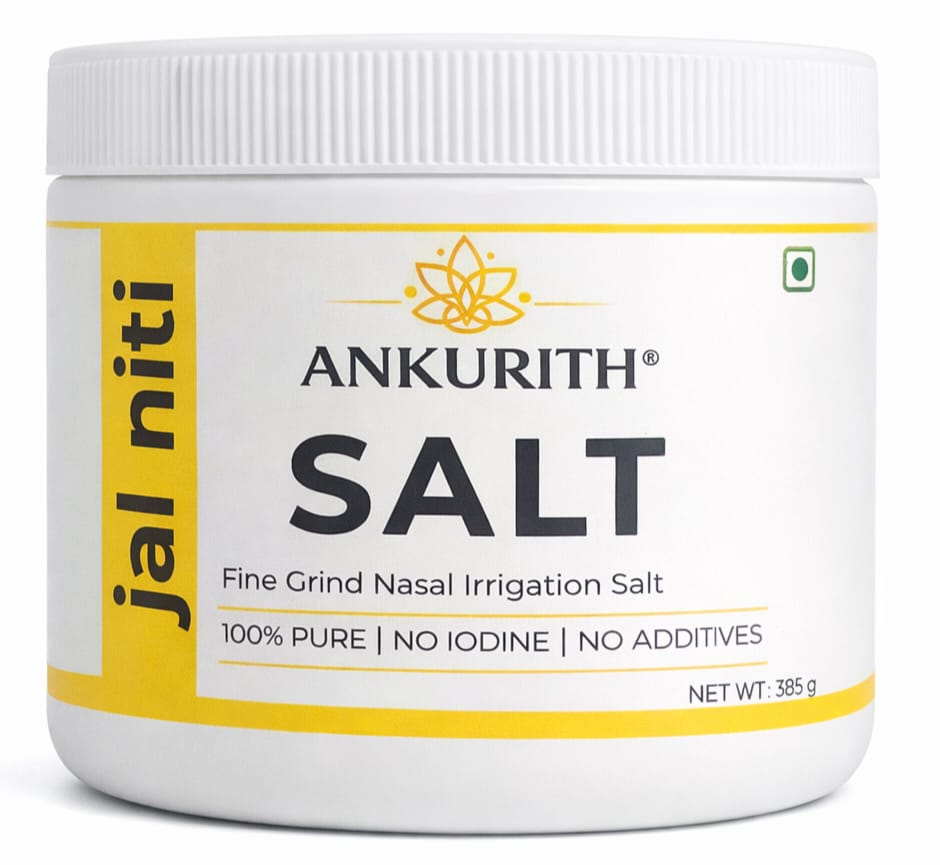
Ankurith Jal Neti Salt
Fine grind, 100% pure, non-iodised. 4.3 g sodium chloride and 0.7 g sodium bicarbonate per 5 g serving, with a measured scoop in every 385 g jar.
Buy on AmazonWhy the salt matters more in winter
Dry air already pulls moisture from the nasal lining. An incorrectly mixed rinse — too dilute, or made with harsh iodised salt — compounds that dryness rather than relieving it.
A properly buffered solution at the right concentration leaves the lining hydrated instead of stripped. That is the practical argument for using a purpose-made neti salt rather than whatever is in the kitchen.
Building the habit before you need it
The people who cope best with high-AQI months are the ones who were already rinsing in October. Starting a new practice while your nose is already blocked and irritated is the hardest possible entry point.
If you are new to this, begin now, gently, two or three times a week. Our complete guide walks through the technique.
Keep reading

7 Mistakes That Make Beginners Quit Jal Neti
Almost everyone who gives up does so in week one, for one of seven entirely fixable reasons.
Read →
Jal Neti vs Saline Nasal Spray
They do related but genuinely different jobs. Here's how to choose — or use both.
Read →
Who Should Not Practise Jal Neti
It's a gentle practice, but not a universal one. The situations that warrant medical advice first.
Read →