
In short: Any neti pot that holds around 250–500 ml, has a spout that seats comfortably in the nostril without being forced, and a mouth wide enough to clean properly will do the job. Material matters less than cleanability.
The three things that actually matter
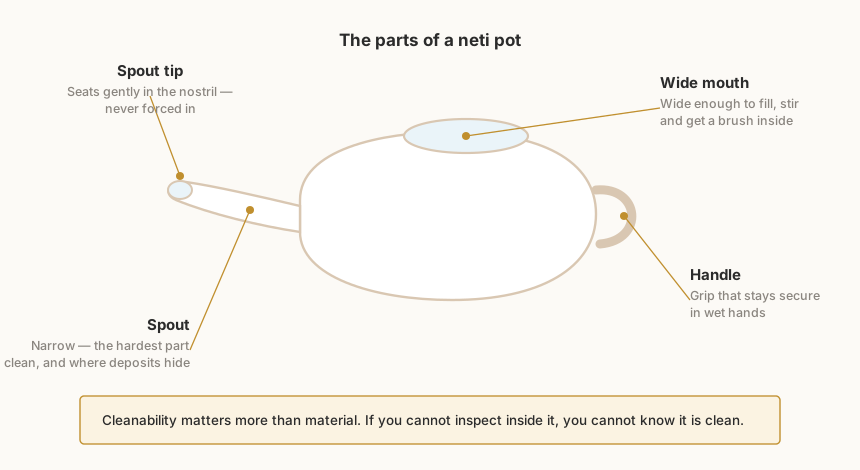
- Spout shape. It must seat gently in the nostril and form a loose seal without being jammed in. Too narrow and it leaks; too wide and it is uncomfortable.
- Cleanability. A wide mouth you can get a brush and your hand into. If you cannot inspect the inside, you cannot know it is clean.
- Capacity. Around 250 ml per nostril is typical. A 500 ml pot does both sides in one fill.
Materials compared
| Plastic | Light, cheap, unbreakable. Practical for daily use and travel. Check it is a food-grade, BPA-free grade. |
|---|---|
| Ceramic | Traditional, pleasant to hold, easy to see when clean. Heavier and breakable — and a hairline crack means replacement, since it cannot be cleaned reliably. |
| Stainless steel | Durable and easy to sterilise. Conducts heat, so it can feel hotter or colder than the water actually is. |
| Copper | Popular in India and visually attractive. Requires regular polishing to manage oxidation, and verdigris in a nasal rinse is not desirable. More maintenance than most people sustain. |
Pot vs squeeze bottle vs syringe
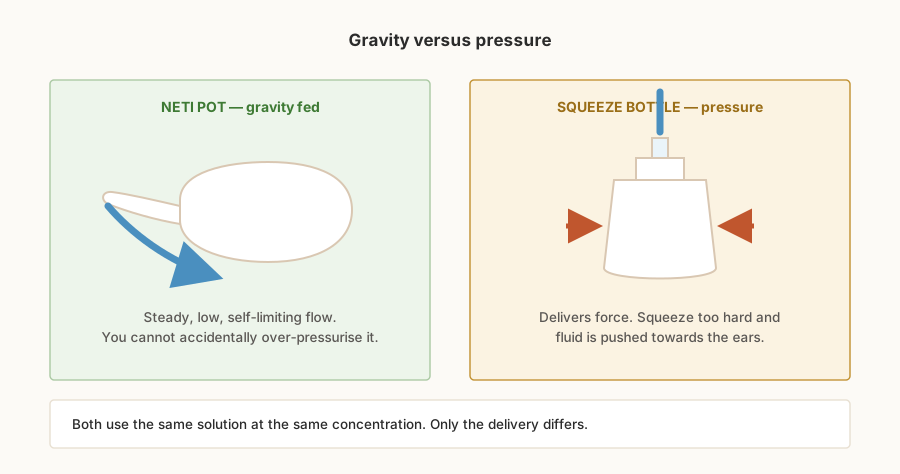
- Neti pot. Gravity-fed, gentle, no pressure. The traditional method and the one we would recommend for daily practice.
- Squeeze bottle. Delivers positive pressure, which some people prefer when congested. The risk is over-squeezing — pressure is what pushes fluid towards the Eustachian tubes.
- Bulb syringe. Harder to control, easier to over-pressurise. Generally used for infants under medical guidance rather than adult self-practice.
All three use the same solution at the same concentration. The salt does not change; only the delivery does.
Cleaning — the part people skip
- Empty completely after every use.
- Rinse with clean water, running it through the spout as well as the body.
- Wash weekly with mild soap and a soft brush, rinsing thoroughly.
- Air-dry completely, upside down, in open air — not sealed in a cupboard or box.
- Store dry and covered.
A damp, closed pot is exactly the environment you took trouble to avoid when you boiled your water. Full detail in how to clean your neti pot.
Never share a pot. One pot, one person — the same rule as a toothbrush. And replace it if it cracks or the spout cannot be cleared.
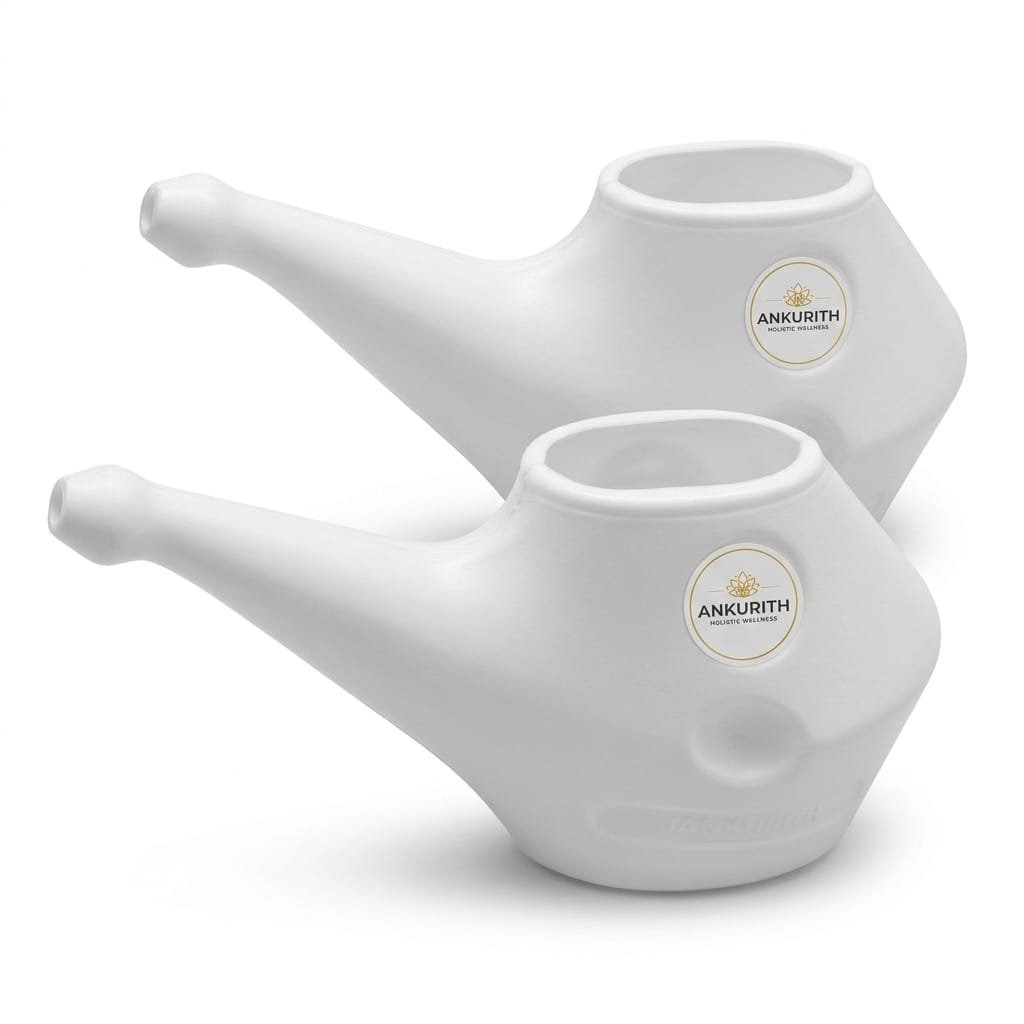
Ankurith Jal Neti Pot
A contoured spout, an easy grip and a wide mouth that actually lets you clean it properly. Made in India.
Buy on AmazonWhen to replace it
Replace immediately if it cracks, if the spout cannot be cleared, if there is discolouration or deposit you cannot remove, or if it has been shared. Otherwise a well-maintained pot lasts years.
Continue learning

What Is Jal Neti?
Definition, etymology, mechanism and scope — the complete foundational explanation.
Read →
Which Water to Use — and Why It Matters
The only genuinely non-negotiable page on this site. What water to use, and the science behind why.
Read →
The Types of Neti
Water, thread, milk and ghee — the traditional variants, and which you should never attempt unsupervised.
Read →