In short: There are two principal forms of Neti: Jal Neti (using saline water) and Sutra Neti (using a soft thread or catheter). Classical texts also describe Dugdha Neti (milk), Ghrita Neti (ghee) and Kapalrandhra Dhauti. Only Jal Neti is suitable for unsupervised self-practice.
Jal Neti — water cleansing
The most widely practised form, and the only one we would suggest learning from written instructions. Lukewarm saline is poured through one nostril and flows out of the other by gravity.
Difficulty: beginner. Supervision needed: no, though a first attempt with someone experienced helps. See: the step-by-step guide.
Sutra Neti — thread cleansing
A soft waxed cotton thread, or in modern practice a thin rubber catheter, is passed into one nostril and drawn out through the mouth, then gently worked back and forth to clear the passage mechanically.
It is genuinely more advanced. It triggers strong reflexes, can cause gagging, nausea and — done badly — bleeding or tissue damage.
Do not attempt Sutra Neti from a written description. It requires an experienced teacher present. This applies to instructions found anywhere, including here — which is why we are describing what it is rather than how to do it.
Dugdha Neti — milk cleansing
Lukewarm milk is used in place of saline. Classically described as more soothing to a nasal lining that has become dry or irritated. It is generally practised occasionally rather than daily, and the hygiene considerations are significant — milk is a far better growth medium than saline, so anything left in the pot or passages matters more.
Ghrita Neti — ghee cleansing
Warm clarified butter is used instead of water. In Ayurvedic practice this overlaps with Nasya, the administration of medicated oils through the nose. It is a distinct discipline with its own indications and should be undertaken under the guidance of a qualified Ayurvedic practitioner rather than self-prescribed.
Kapalrandhra Dhauti
Sometimes grouped with Neti practices, this involves massaging the frontal sinus region with the thumbs, traditionally after Jal Neti. It is a manual technique rather than an irrigation one.
Which should you actually do?
For essentially everyone reading this: Jal Neti. It delivers the practical benefit of nasal cleansing, is well-understood, low-risk when the water rule is followed, and takes five minutes.
Sutra Neti is a legitimate practice with a long tradition behind it, but it belongs in a classroom with a teacher, not in an article.
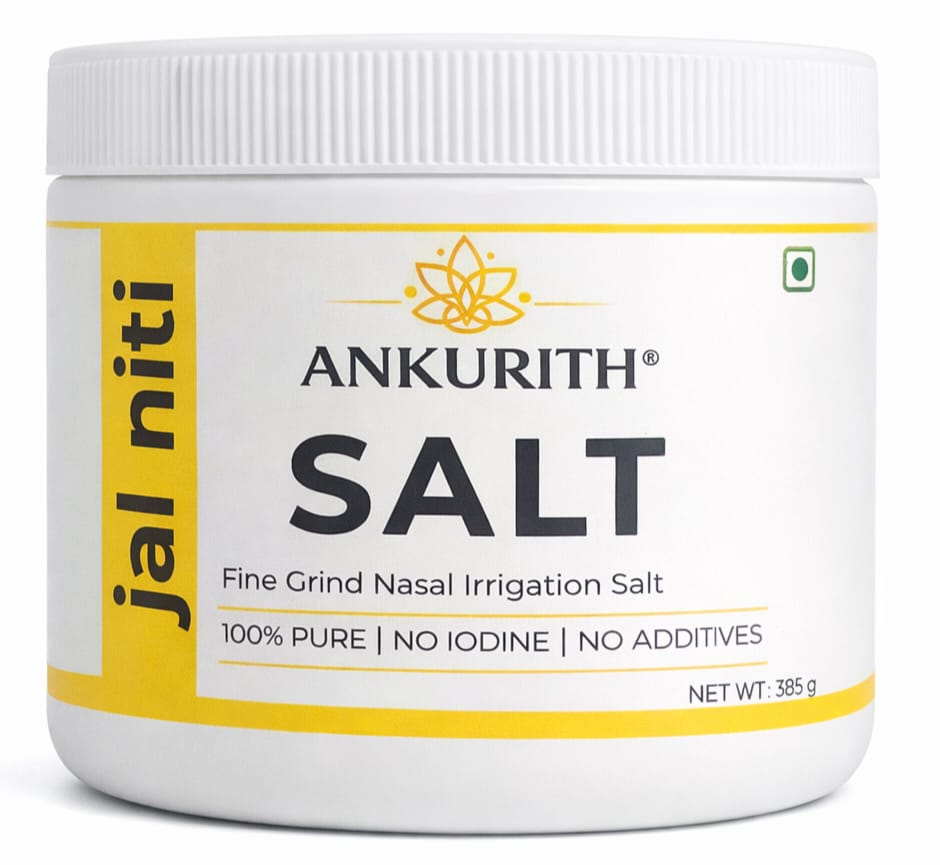
Ankurith Jal Neti Salt
Fine grind, 100% pure, non-iodised. 4.3 g sodium chloride and 0.7 g sodium bicarbonate per 5 g serving.
Buy on AmazonNeti within the shatkarmas
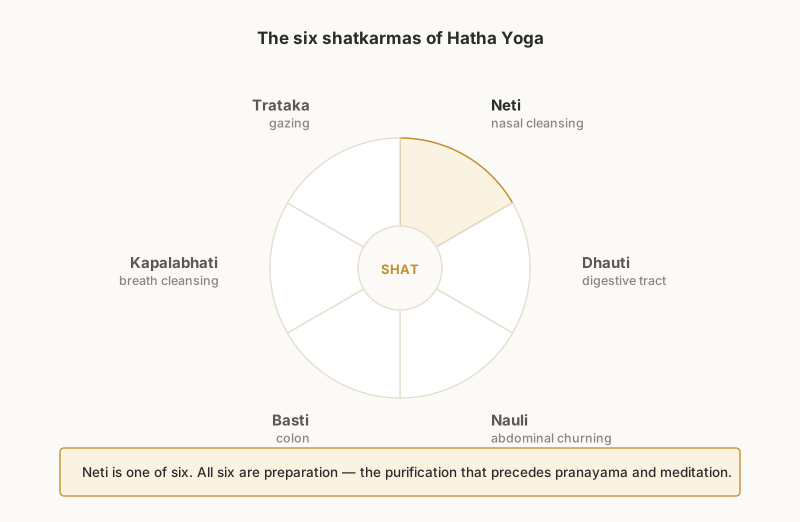
All of these sit inside Neti, which is itself one of six classical purification practices. We cover that framing in Jal Neti's place in the six shatkarmas.
Continue learning

What Is Jal Neti?
Definition, etymology, mechanism and scope — the complete foundational explanation.
Read →
Which Water to Use — and Why It Matters
The only genuinely non-negotiable page on this site. What water to use, and the science behind why.
Read →
How Your Nose Actually Works
Turbinates, cilia and the mucus blanket — the anatomy that explains what rinsing can and cannot achieve.
Read →