In short: Use only water that has been boiled and cooled, or that is distilled or sterile. Never use untreated tap water in a neti pot. This is guidance issued by both the US FDA and the CDC, and it applies regardless of how safe your local drinking water is.
Why drinking tap water is fine but rinsing with it is not
Your stomach is an extremely hostile environment. Gastric acid destroys the great majority of organisms present at the low concentrations found in treated municipal water, which is why drinking it is generally uneventful.
The nasal cavity offers no comparable defence. It is warm, moist, and lined with a permeable mucous membrane that sits close to the base of the skull. Organisms that would be destroyed in the stomach can survive there.
What the health authorities actually say
The US Food and Drug Administration and the Centers for Disease Control and Prevention both advise that nasal rinsing devices should be used only with distilled, sterile, or previously boiled and cooled water. The CDC's stated method is to boil water for at least one minute — three minutes at elevations above roughly 6,500 feet — and allow it to cool.
The organisms of concern are rare but serious. Naegleria fowleri, which causes primary amoebic meningoencephalitis, and Acanthamoeba species have both been linked to nasal rinsing with untreated water. These infections are uncommon, but they are severe, and they are entirely preventable.
This is not a claim about Indian water quality. The identical guidance is issued in countries with very high water-treatment standards. Chlorination at drinking-water levels does not reliably eliminate these organisms, and the risk is about the route of entry, not the source country.
How to prepare water correctly
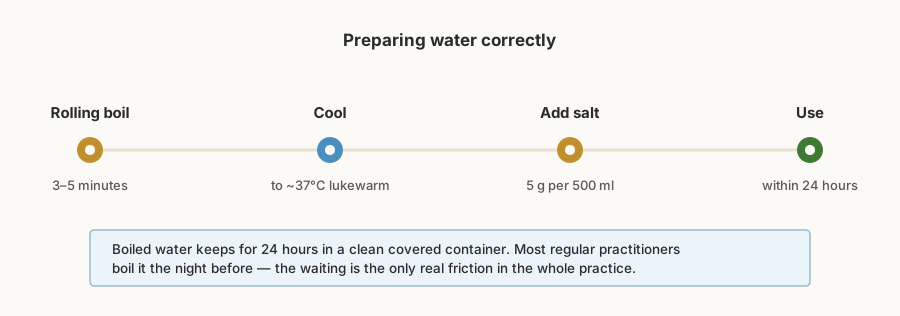
- Boil. Bring water to a rolling boil and hold it there for three to five minutes.
- Cool. Let it come down to lukewarm — close to body temperature, around 37°C. Test on the inside of your wrist; it should feel neutral, neither warm nor cool.
- Store safely. Keep it in a clean, covered container. Use within 24 hours, then boil fresh.
- Add salt last. One level 5 g scoop per 500 ml, stirred until completely clear.
What counts as safe, and what does not
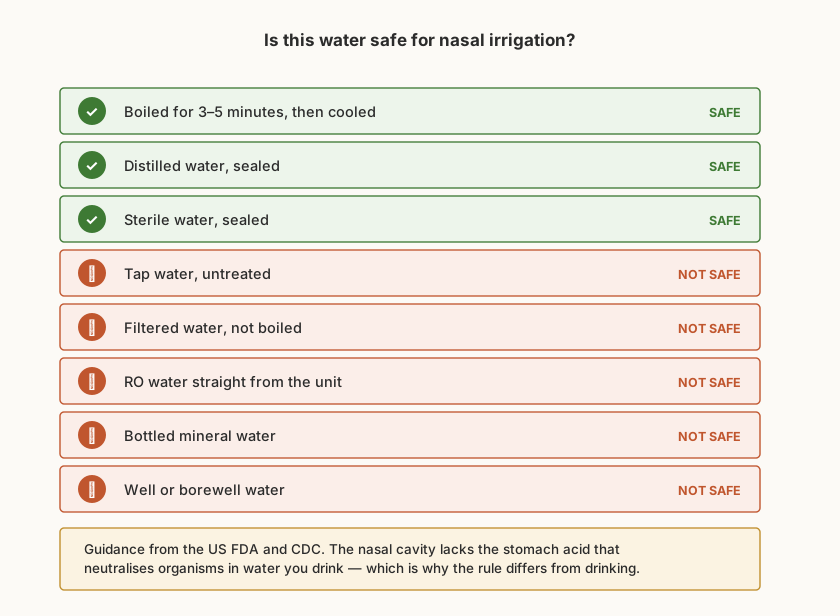
| Boiled and cooled water | Safe — the standard method |
|---|---|
| Distilled water (sealed) | Safe |
| Sterile water (sealed) | Safe |
| Untreated tap water | Not safe |
| Filtered tap water (unboiled) | Not safe unless the filter is rated for cysts (1 micron absolute or finer) |
| RO water straight from the unit | Not safe unboiled |
| Bottled mineral water | Not safe unless labelled sterile or distilled |
| Well or borewell water | Not safe unboiled |
The pot matters too
Correctly prepared water poured into a damp, unwashed pot is no longer correctly prepared water. Rinse the pot after every use, wash it weekly with mild soap, and let it air-dry completely before storing. Never share a pot between people.
We cover this fully in how to clean your neti pot.
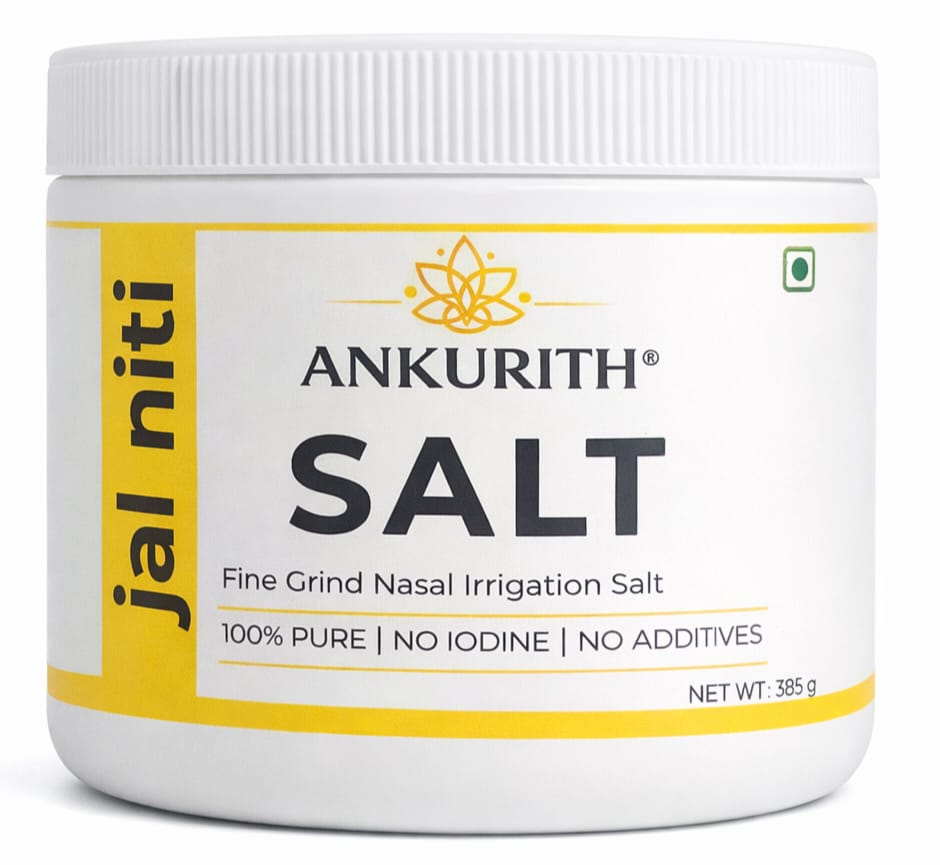
Ankurith Jal Neti Salt
Fine grind, 100% pure, non-iodised. 4.3 g sodium chloride and 0.7 g sodium bicarbonate per 5 g serving.
Buy on AmazonIf you remember one thing from this entire site
Remember this page. Poor technique makes Jal Neti uncomfortable. Wrong water is the only part of the practice with a genuine safety consequence attached — and it is completely within your control.
Continue learning

What Is Jal Neti?
Definition, etymology, mechanism and scope — the complete foundational explanation.
Read →
The Types of Neti
Water, thread, milk and ghee — the traditional variants, and which you should never attempt unsupervised.
Read →
How Your Nose Actually Works
Turbinates, cilia and the mucus blanket — the anatomy that explains what rinsing can and cannot achieve.
Read →